











Are you still relying on branch managers to train every new employee? When your franchise has one or two branches, training feels manageable.
You can guide managers directly, explain SOPs yourself, and check if new staff understand the process. But once the business grows, training becomes harder to control. One branch may follow the full process. Another may train staff through WhatsApp messages. Another may skip small details because the manager is too busy.
After some time, each branch starts doing things in its own way. That affects service, quality, and customer experience. A franchise training portal helps you keep every branch on the same page. It gives franchise owners, managers, and staff one place to learn the same process, complete the same courses, and follow the same brand standards.
What Is a Franchise Training Portal?
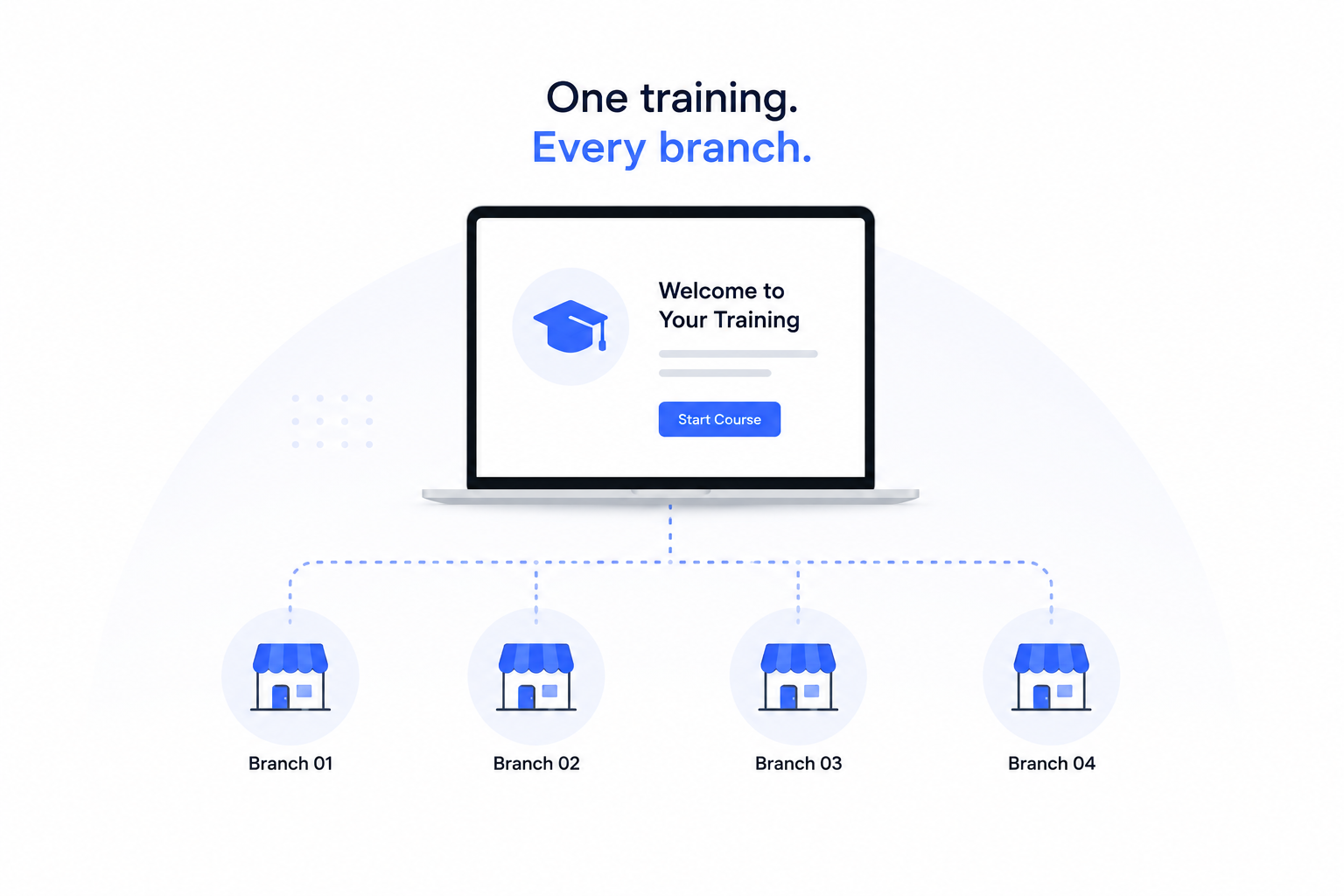
A franchise training portal is an online learning system for franchise businesses. It can be used to train franchise owners, branch managers, staff and regional teams all in one location. It can handle courses, users, quizzes, certificates, and reports, making it suitable for many businesses as a franchise training LMS.
You can add training for:
- Franchise onboarding
- SOP training
- Product training
- Customer service training
- Compliance training
- Brand guidelines
- Daily operations
- Staff roles
This makes franchisee training easier to manage. A new franchise owner can follow a clear learning path before opening a branch. A new employee can complete the right training before serving customers. A manager can check who finished training and who still needs support. You do not have to depend only on calls, PDFs, or manager instructions.
Franchise Training Portal vs Traditional Training
Traditional training can work when you manage only a few branches. As the franchise grows, it becomes harder to keep training consistent, updated, and easy to track.
Here is a quick comparison.
| Area | Traditional Training | Franchise Training Portal |
| Training Delivery | Managers use calls, PDFs, manuals, and in-person sessions | Every branch uses the same online courses, videos, and learning paths |
| Consistency | Training quality depends on each manager | Every branch receives the same training and follows the same standards |
| Progress Tracking | Head office relies on manual follow-up | Managers can check completions, scores, and branch progress in one place |
| Content Updates | New information must be shared with each branch separately | Head office updates the content once for every branch |
| New Staff Onboarding | The process may change from one location to another | New employees follow the same onboarding path at every branch |
Traditional training depends heavily on branch managers, repeated follow-ups, and manual updates. This takes time away from daily operations, slows down new employee onboarding, and makes it harder to keep every branch following the same standards.
Why Franchise Training Gets Harder as You Grow
A customer expects the same service at every branch. That only happens when every branch follows the same training process. Without a proper branch training system, each location slowly creates its own version of training.
At TeknoFlair, we see this happen when growing franchises rely too much on branch managers, shared files, and manual follow-ups.
You may start seeing problems like:
- Each branch trains staff differently
- SOP training depends too much on managers
- Product updates do not reach every team on time
- New employees take longer to become ready
- Franchisors cannot track training completion
- Customer service becomes uneven
- Compliance training gets missed
This is why many businesses search for how to train franchise branches the same way. They do not just need more training content. They need one system that keeps training clear, updated, and easy to track.
A good franchise training portal for multi-location businesses gives you that control. Your teams can learn from the same content. Managers can track progress. Head office can update courses whenever policies, products, or processes change.
If you want to know how to keep franchise training consistent, start with one simple question: Can every branch access the same training, complete it in the right order, and show proof that it is done? If not, your training process needs a better structure.
How a Franchise Training Portal Keeps Every Branch Aligned
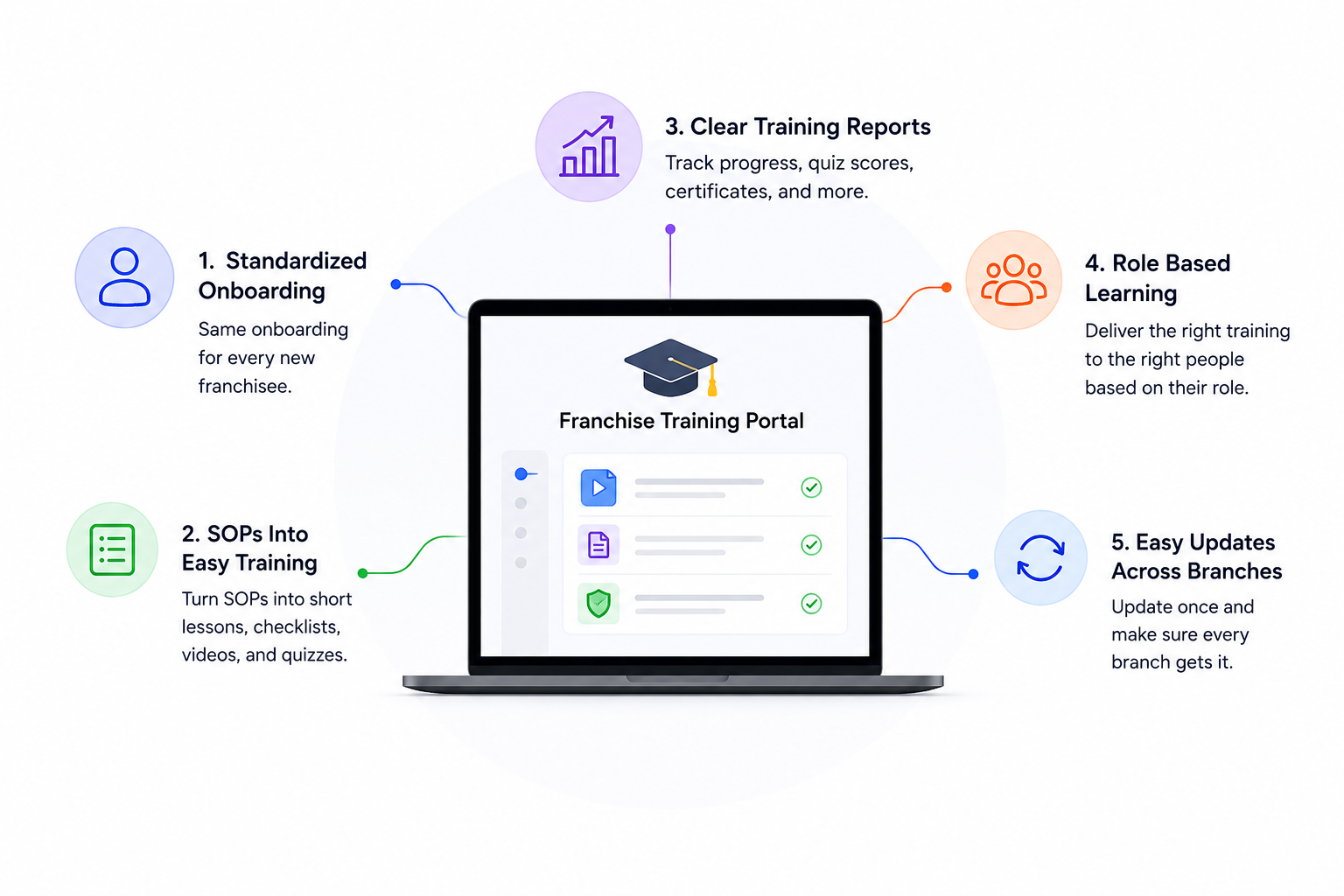
A franchise training portal gives your teams one clear system for learning. Courses can be developed once, upgraded as necessary and ensure they are followed by all branches. This way you can maintain training consistency without having to say the same thing over and over.
1. It Standardizes Franchise Onboarding
Every new franchisee should understand the business before they start operating. They need to know the brand, daily process, service rules, reporting method, and quality standards. A structured onboarding path makes this easier.
Your franchise onboarding can include:
- Brand introduction
- Store or branch setup
- Operations training
- Product training
- Customer service rules
- Compliance training
- Final onboarding checklist
This also helps you onboard new franchisees faster. Instead of long calls and scattered documents, each new franchisee can follow the same learning path from day one.
2. It Turns SOPs Into Easy Training
Most franchises already have SOPs. The problem is that staff do not always read long documents. A portal lets you turn SOP training into short lessons, checklists, videos, and quizzes.
You can create training for:
- Opening and closing process
- Cleaning routine
- Inventory handling
- Refund policy
- Customer complaints
- Daily reporting
- Safety rules
This makes operations training easier to follow. It also reduces the chance of each branch explaining the process in a different way.
3. It Gives Managers Clear Training Reports
You cannot improve training if you cannot track it. A franchise LMS gives managers and franchisors clear training reports. They can see who completed a course, who failed a quiz, and which branch is falling behind.
Useful reports may include:
- Course completion
- Branch-wise progress
- Quiz scores
- Certificate status
- Missed training
- Manager follow-up
These reports help you make better decisions. If one branch has low training completion, you can check it early. If staff fail the same quiz, you can improve that lesson.
4. It Supports Role Based Learning
Not every person in a franchise needs the same training. A branch owner, manager, cashier, kitchen staff member, and delivery team member all have different tasks. Role based learning helps you assign the right courses to the right people.
A cashier may need payment, refund, and customer handling training. A manager may need reporting, staff scheduling, and quality control training. A franchise owner may need business operations, brand rules, and branch performance training. This keeps learning simple for users. They only see the courses that match their role, branch, or region.
5. It Makes Updates Easier Across Branches
Franchise businesses change often. You may launch a new product, update pricing, change a policy, or improve a daily process. Without a system, updates can get missed. One branch may receive the new process. Another may keep using the old one.
A franchise learning management system helps you update training from one place. You can add a new lesson, assign it to every branch, and track who completed it. This is one of the clearest ways to see how franchise LMS improves brand consistency.
Every branch gets the same update. Every team learns the same process. And you can check completion without chasing each manager separately.
What Should a Franchise Training Portal Include?
A good portal should make training easy for branch teams and easy to track for the head office. You do not need to add everything at once. Start with the training that affects daily work the most.
Your franchise training software should include:
If your teams work in stores, restaurants, clinics, salons, or service branches, mobile access matters. Staff may not sit at a desk all day. They should still be able to complete training from a phone or tablet.
A multi-tenant LMS can also help if you want each branch or region to have its own training space while the head office keeps overall control.
How to Launch a Franchise Training Portal
You do not need to launch everything at once. Start with the training that creates the biggest impact on daily work. Then add more courses over time.
A simple launch plan can look like this:
- List your current training material
Collect SOPs, manuals, videos, checklists, product guides, and policy documents. - Choose the most important courses first
Start with onboarding, SOP training, customer service, compliance, and product training. - Create role based learning paths
Give each user the courses they actually need. A manager, cashier, and franchise owner should not see the same full course list. - Test with one branch first
Let one branch use the portal before launching it everywhere. This helps you find confusing lessons, missing steps, or access issues. - Launch across all branches
Once the test branch works well, assign training to every location. - Review reports every month
Check training completion, quiz scores, missed lessons, and branch progress. This helps you improve the training system over time.
A phased launch is easier to manage. Your team also gets time to learn the system step by step. You do not have to handle the full setup alone. TeknoFlair builds WordPress LMS and LearnDash portals for franchise training, onboarding, and branch reports. This keeps training easier to manage as your franchise grows.
Scale Your Franchise Without Losing Training Quality
A franchise training portal helps every branch learn the same way. It gives franchise owners, managers, and staff one place to complete onboarding, learn SOPs, follow brand standards, and stay updated. For franchisors, it gives better control. Managers can reduce repeated training work. And for employees, it makes learning easier.
If you want the best LMS for franchise training, focus on simple course structure, clear reports, mobile access, and branch-level tracking.
FAQs
What is a franchise training portal?
A franchise training portal is one place where owners, managers, and staff can learn. Every branch can use the same training.
Why do franchises need an LMS?
An LMS helps every branch train staff in the same way. It also helps you share updates and see who finished the training.
How does a franchise training LMS keep branches the same?
It gives every branch the same courses, rules, steps, and updates. This stops each branch from making its own training process.
What should franchisee training include?
It should include brand rules, daily work, customer service, products, reports, safety and branches setup.
Is WordPress suitable for creating a franchise training site?
Yes. You can use WordPress with LearnDash to add courses, users, quizzes, and training reports.
What is the best way for franchisors to monitor the training in each branch?
They can check who finished a course, quiz scores, branch progress, and certificates. This shows which branches need help.
When should a business build a franchise LMS?
Build one when training becomes hard to manage, managers keep repeating the same steps, or branches start working in different ways.
