





Most businesses spend time and money getting visitors to their website. Yet many still show the same content to every visitor who arrives.
Different visitors often have different goals. Some are learning, some are comparing options, and some are ready to buy. Yet many websites still show them the same experience. This creates missed opportunities. That’s where AI website personalization can come in handy.
It does not display the same material to all visitors. It can personalize the website experience to the user’s actions, preferences, location and traffic source. This helps customers discover what they are looking for faster.
AI-website personalization is use by businesses in various sectors to boost and conversion rates. Let’s explore the concept of AI-driven personalization and its role in boosting conversions. Plus, how you can implement AI in your business to improve customer experiences.
Why Generic Websites Struggle to Convert Modern Buyers
At TeknoFlair, we’re frequently seeing companies provide the same website experience for each visitor. The issue is that not all visitors are looking for the same.
Users are now looking for websites to be more relevant. They want to see content and recommendations relevant to their interests.
Think about the websites and apps people use every day. Netflix shows recommendations according to what you watch. Spotify makes playlists for you according to what you listen to.
This is why visitors are looking for the same experience at all places. If the website displays the same content to all visitors, it might seem less useful.
This presents a few hurdles for companies:
- Visitors leave without finding relevant information.
- Bounce rates increase.
- Lead forms receive fewer submissions.
- Product discovery becomes more difficult.
- Conversion rates remain lower than expected.
A number of industry studies have shown that personalization can help to boost revenue performance. Companies with more relevant customer experiences have higher retention and customer satisfaction. The challenge is scale.
Site personalization takes time and typically demands manual rules, updates, and resources. This is why more companies are turning to AI personalization solutions for automatic adaptation.
What Is AI-Powered Website Personalization?
AI-powered website personalization uses data, machine learning, and behavioral insights to customize website experiences for individual visitors.
The end result would be to present the most relevant content, offer, recommendation, or call-to-action. It will be based on the interests of the visitors. AI looks beyond the rule book and instead makes decisions based on patterns.
For example, an AI website personalization tool may identify:
- Returning visitors
- High-intent prospects
- Previous customers
- Visitors from specific locations
- Users interested in particular products
The system can then adjust the experience automatically. This may include:
- Personalized product recommendations
- Dynamic content blocks
- Customized offers
- Personalized calls-to-action
- Content recommendations
- Location-specific messaging
As more interactions occur, the system continues learning and refining recommendations. This creates a personalized website experience that becomes more relevant over time.
AI Personalization vs Traditional Website Personalization
Many businesses already use some form of website personalization. However, there is a significant difference between traditional personalization and AI-driven personalization.
| Factor | Traditional Personalization | AI-Powered Website Personalization |
| Segmentation | Manual | Automated |
| Rules | Fixed conditions | Dynamic decisions |
| Updates | Manual adjustments | Continuous learning |
| Recommendations | Limited | Predictive |
| Scalability | Lower | Higher |
| Adaptability | Slower | Real-time |
Traditional systems often rely on predefined rules.
For example: “If a visitor comes from Facebook, show Offer A.”
This is fine, but can be more challenging to monitor as the audience increases. Personalization software for websites with AI can handle hundreds of signals and adjust experiences automatically.
7 Ways AI-Powered Website Personalization Increases Conversions
1. Personalized Product Recommendations
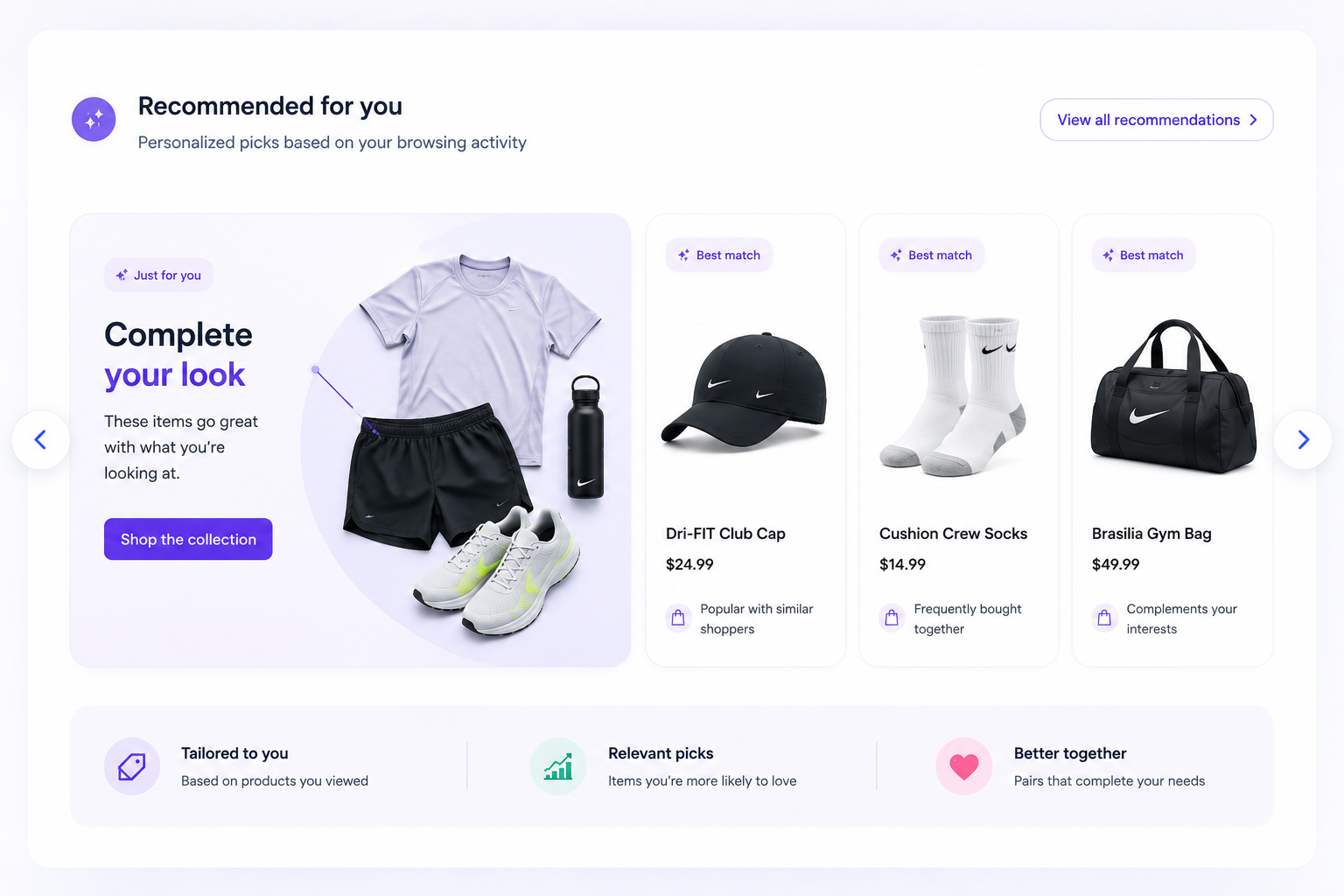
Product recommendations remain one of the most widely used forms of AI content personalization.
Rather than displaying the same products to every visitor, AI identifies items that are most likely to generate interest.
This approach is common in:
- E-commerce stores
- SaaS marketplaces
- Online education platforms
- Subscription businesses
For example, A viewer who is looking at running shoes, for instance, can also be suggested running clothes and accessories.
This means that businesses can expect to improve their conversion rates and average order value.
2. Dynamic Content Based on Visitor Intent
For someone who has searched for a price, they are likely to be closer to making a purchase than someone who has read an educational blog article.
AI Personalization helps recognize these distinctions and customizes the content accordingly.
Examples include:
- Personalized offers
- Dynamic CTAs
- Relevant case studies
Like a visitor from Google searching “accounting software for small business,” may see the headline: “Accounting Software for Small Businesses.”
While another visitor searching “accounting software for freelancers” sees a headline: “Accounting Software for Freelancers.”
Same page structure but with different messaging.
Tools like: HubSpot, Optimizely, Mutin, and Adobe Target allow this.
This type of dynamic website personalization allows businesses to better match content with visitor intent. When content aligns with expectations, conversions typically improve.
3. Smarter Lead Generation Forms
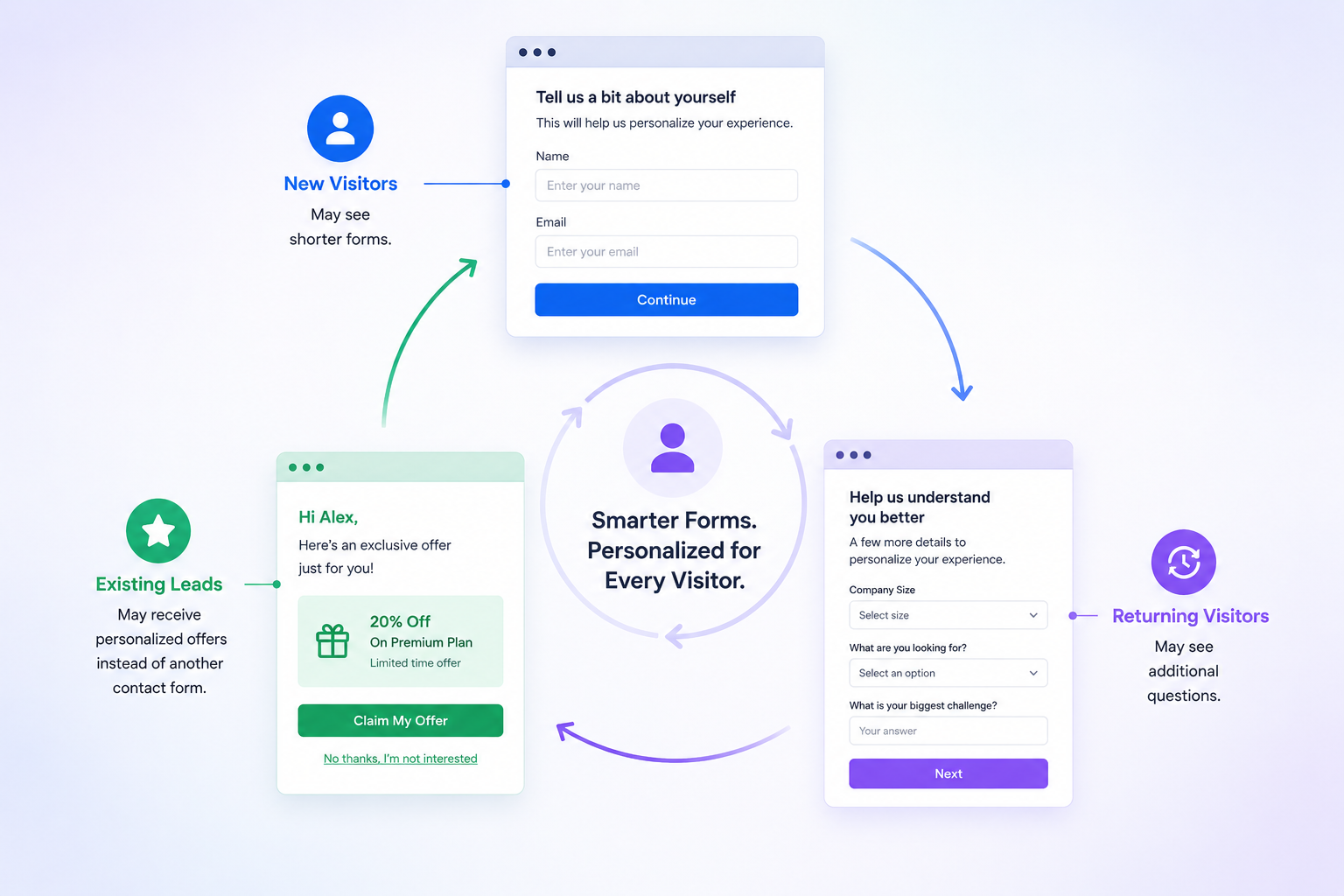
Lead generation forms often create unnecessary friction. Many businesses ask for too much information too early. Visitors see long forms and leave without submitting them.
AI personalization helps solve this problem by adjusting forms based on visitor behavior and previous interactions.
For example:
- New visitors may see shorter forms.
- Returning visitors may see additional questions.
- Existing leads may receive personalized offers instead of another contact form.
This will enable businesses to gather information over time and enhance the user experience. This can lead to more qualified leads for businesses, with fewer abandoned forms.
4. Personalized Calls-to-Action
Not all visitors are served by the same CTA. A new visitor to your site may not be prepared to make a consultation appointment. But a repeat visitor might be willing to make that move after looking at several pricing pages.
AI-driven website personalization enables companies to show more targeted CTAs based on visitor intent.
| Visitor Type | Personalized CTA |
| New Visitor | Learn More |
| Returning Visitor | Request a Demo |
| Existing Customer | Upgrade Plan |
| High-Intent Lead | Schedule Consultation |
Small improvements in CTA relevance can create significant conversion gains over time.
5. Location-Based Personalization
Many businesses serve customers across different cities, regions, and countries. AI can personalize website experiences based on location data.
This may include:
- Local pricing
- Region-specific offers
- Local case studies
- Language preferences
- Service availability
For example, a software company may display different pricing information based on a visitor’s region. A local service provider may show city-specific content to improve lead quality.
These adjustments create a more personalized customer experience and improve relevance.
6. AI-Powered Search and Content Recommendations
Visitors often arrive with questions but struggle to find answers quickly. AI-powered search and recommendation systems help guide users toward relevant content.
Examples include:
- Recommended blog articles
- Related products
- Help center suggestions
- Knowledge base content
- Service recommendations
When visitors find useful information faster, they are more likely to stay engaged and continue through the customer journey.
This is why many businesses invest in website personalization software that includes recommendation engines.
7. Predictive Personalization
Predictive personalization takes AI personalization a step further. Instead of reacting to visitor behavior, AI predicts what a visitor is likely to do next.
This may include:
- Predicting purchase intent
- Identifying high-value leads
- Recommending products
- Suggesting content
- Highlighting services
Predictive systems help businesses create more relevant experiences before visitors actively request information.
This can significantly improve conversion opportunities across the entire website.
Real Industry Examples of AI Website Personalization
1) E-commerce
E-commerce businesses were among the earliest adopters of website personalization. AI helps online stores recommend products, personalize offers, display relevant content, and improve product discovery.
Examples include:
- Product recommendations
- Cart recommendations
- Dynamic promotions
- Purchase history suggestions
Many e-commerce brands use AI-driven personalization to increase average order value. It also improve customer retention.
2) SaaS
Software companies often attract visitors with different needs. Some visitors are evaluating solutions. Others are comparing pricing or exploring specific features.
AI-powered website personalization helps SaaS businesses deliver:
- Personalized onboarding experiences
- Relevant feature recommendations
- Dynamic pricing page content
- Industry-specific case studies
- Customized demo requests
These improvements help visitors move through the buying journey more efficiently.
3) Travel and Hospitality
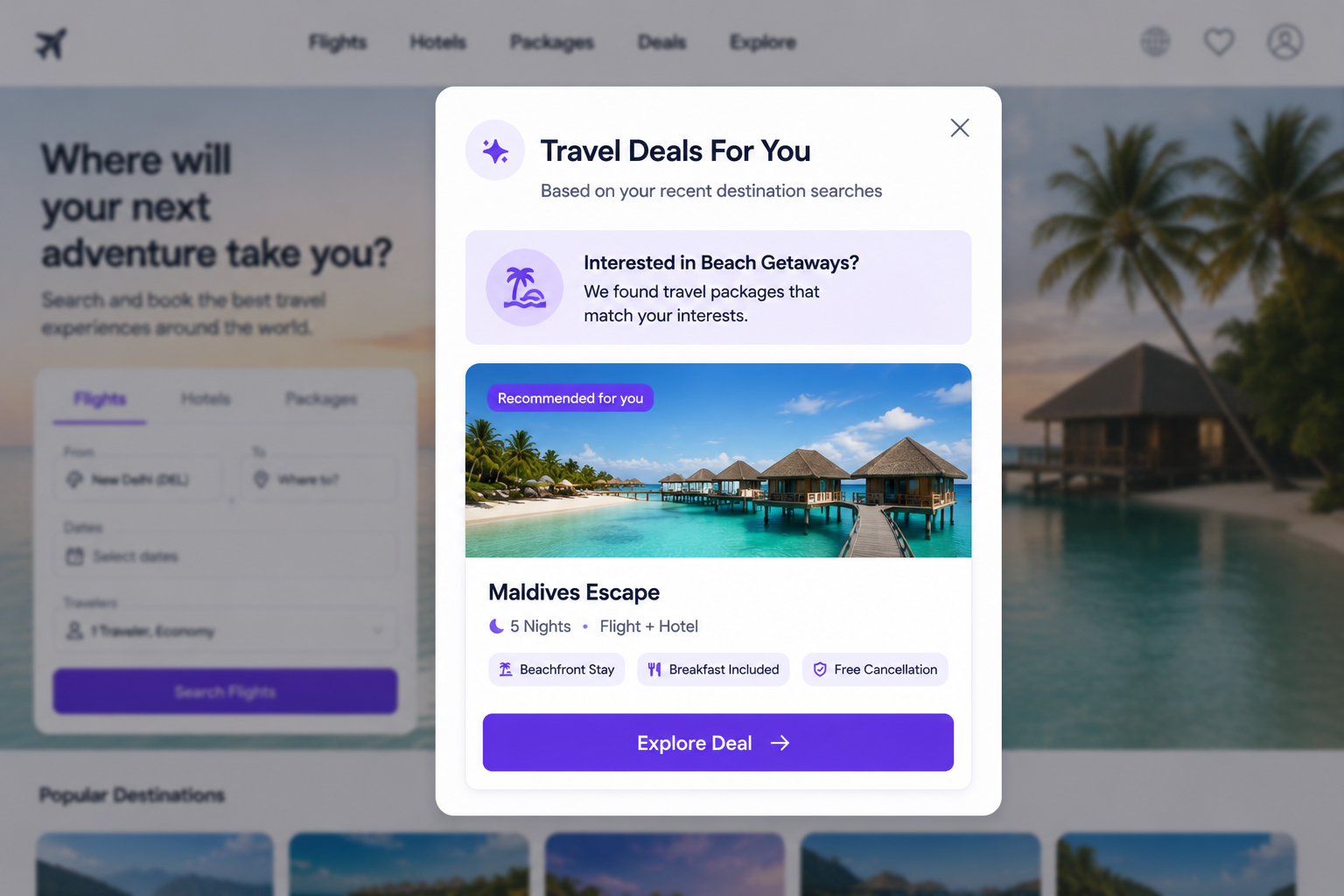
Many visitors to travel sites have different intentions. There are certain travelers who look for the cheapest choices. Others look for luxury experiences, flexibility, or unique places.
AI personalization enables travel companies to showcase location-specific travel offers, seasonal deals and travel packages according to the customer’s interests.
For example, a flight booking platform can recommend destinations and display personalized travel deals based on browsing behavior. This creates a more relevant booking experience.
4) Healthcare
Healthcare organizations use AI personalization to guide visitors toward relevant services and resources.
Examples include:
- Service recommendations
- Appointment scheduling paths
- Location-specific healthcare information
- Doctor’s Information
This helps patients find information more quickly and improves engagement.
5) Education
Educational institutions and online learning platforms use AI content personalization to improve course discovery.
Examples include:
- Personalized course recommendations
- Learning path suggestions
- Program-specific content
- Student onboarding experiences
These improvements help students make decisions faster while improving enrollment rates.
6) Financial Services
Financial services organizations often offer multiple products and services. AI personalization helps simplify decision-making by recommending relevant products based on visitor interests.
Examples include:
- Loan calculators
- Investment recommendations
- Insurance product suggestions
- Personalized financial content
This helps visitors find solutions that align with their needs.
When Personalization Can Hurt Conversions
Personalization can improve results, but poor implementation can create problems. Some businesses become overly aggressive with personalization.
Visitors may feel uncomfortable when websites appear to know too much about them. Other businesses use inaccurate data, leading to irrelevant recommendations.
| Effective Personalization | Poor Personalization |
| Helpful | Intrusive |
| Relevant | Irrelevant |
| Contextual | Overly Personal |
| Useful Recommendations | Confusing Suggestions |
The goal is to improve relevance while maintaining trust. Businesses should focus on creating helpful experiences rather than attempting to personalize every interaction.
Best AI Website Personalization Tools
Several AI website personalization tools are helping businesses improve customer experience.
| Tool | Best For | What It Does |
| Dynamic Yield | Large E-commerce Brands | Shows personalized products, content, and offers to different visitors. |
| Optimizely | Businesses Improving Conversions | Tests and personalizes website experiences to increase conversions. |
| Adobe Target | Enterprise Businesses | Delivers tailored content and experiences to different audience groups. |
| Mutiny | B2B SaaS Companies | Adjusts website messaging and CTAs based on visitor intent. |
The right platform depends on business goals, technical resources, and personalization requirements.
Measuring the ROI of Website Personalization
The success of website personalization should be judged on business outcomes, not website activity. Some important metrics to track include:
Conversion Rate
Displays the number of visitors who take some action, such as making a purchase, signing up for a demo or filling out a form.
Lead Generation Rate
Shows whether personalization is helping you attract more qualified leads.
Bounce Rate
Shows whether visitors are finding relevant content or leaving the website quickly.
Average Order Value
Shows if personalized recommendations increase spending by customers.
Revenue Per Visitor
Indicates the average value of each web page visitor.
Customer Engagement
Shows how visitors interact with your website, content, products, or services.
There are businesses that only consider clicks and engagements. But the main goal of AI-driven website customization will be to increase sales and retention.
How to Get Started Without Overcomplicating It
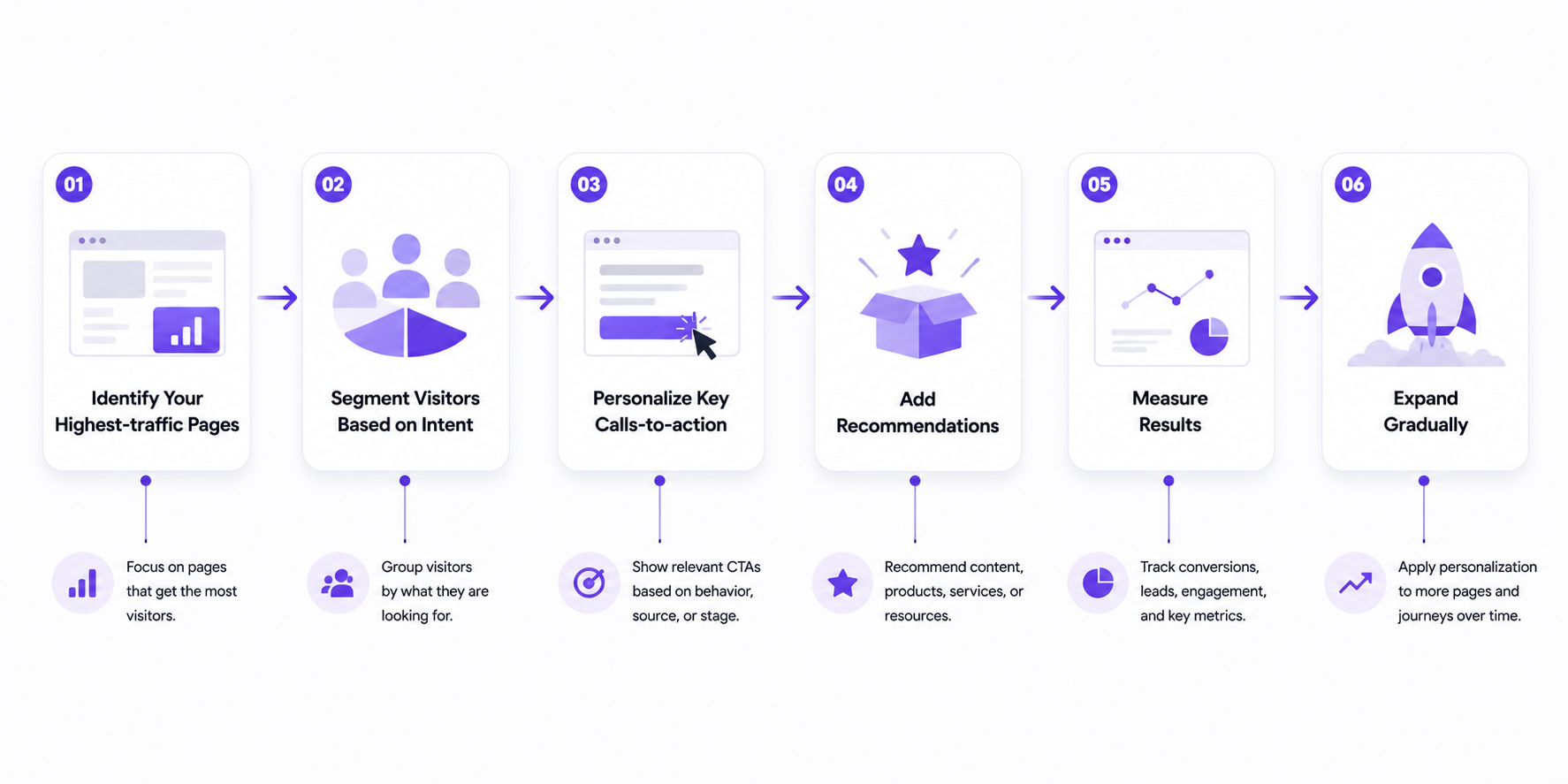
Companies often put off personalization, thinking that it will cost a lot of money and require special software. However, most businesses can begin by doing a few basic things.
A practical approach looks like this:
Identify your Highest-traffic Pages
These pages are usually the ones with high levels of traffic, like your home page, landing pages or service pages.
Segment Visitors Based on Intent
Classify visitors according to the intention behind their visit. For instance, if someone is a new visitor, he/she probably need to be educated, while a return visitor might be close to becoming a customer.
Personalize Key Calls-to-action
Show different CTAs based on visitor behavior, traffic source, or stage in the buying journey.
Add Recommendations
Make personalized recommendations regarding products, services, articles, etc.
Measure Results
Monitor the conversion rate, lead generation, engagement, and other performance indicators.
Expand Gradually
When successful and start getting results, personalize more pages and the customer journey.
Starting small helps businesses learn what works for their audience while keeping implementation manageable.
Final Thoughts
AI-powered website personalization is becoming an important part of modern conversion optimization strategies. Customers expect relevant experiences. They want websites that help them find information quickly and guide them toward the next step.
Businesses that continue delivering generic experiences often struggle with lower engagement, weaker lead generation, and missed conversion opportunities.
The good news is that AI personalization is becoming more accessible than ever. Businesses of all sizes can now create personalized website experiences that improve relevance, engagement, and conversions.
If you’re exploring AI-powered website personalization for your business, Picasso Design can help identify opportunities to improve customer journeys, increase engagement, and create conversion-focused website experiences that support long-term growth.
FAQs
What is AI-powered website personalization?
AI-powered website personalization uses data and machine learning to adapt website experiences based on visitor behavior, preferences, and intent.
How does AI website personalization increase conversions?
AI website personalization improves relevance, reduces friction, and helps visitors find information faster. These improvements often lead to higher conversion rates.
What is the difference between AI personalization and traditional personalization?
Traditional website personalization relies on manual rules, while AI personalization continuously analyzes data and adapts experiences automatically.
Can website personalization improve lead generation?
Yes. Personalized forms, offers, content, and CTAs can improve lead quality and increase form submissions.
What industries benefit most from AI-powered website personalization?
E-commerce, SaaS, healthcare, education, financial services, and travel businesses commonly use AI personalization to improve conversions.
What are the best AI website personalization tools?
Popular options include Dynamic Yield, Optimizely, Adobe Target, Mutiny, and Insider.
Can AI personalization reduce website bounce rates?
Yes. Personalized website experiences often help visitors find relevant information more quickly, which can reduce bounce rates.
Is AI-powered website personalization worth it for small businesses?
Many small businesses can benefit from AI personalization by improving customer experiences, lead generation, and conversion performance without requiring large teams.
Does website personalization affect SEO?
Website personalization does not directly improve rankings, but it can improve engagement signals, user experience, and conversion performance.
How do you measure the success of website personalization?
Track metrics such as conversion rate, lead generation, average order value, engagement, and revenue per visitor to evaluate results.
