



Healthcare professionals must learn and develop their knowledge and skills throughout their careers. Because medical science is advancing every day, patient safety is dependent on continuous learning and development. Because of this, many doctors, nurses, pharmacists, and other healthcare workers are required to complete Continuing Professional Development (CPD).
For training providers, this creates extra responsibility to track activities, record CPD credits, issue certificates, and keep reports for audits. Managing all of this manually can become difficult and time-consuming.
Let’s see how healthcare organizations can use LearnDash and a CEU tracking system to manage professional development easily.
What is Continuing Education in Healthcare?
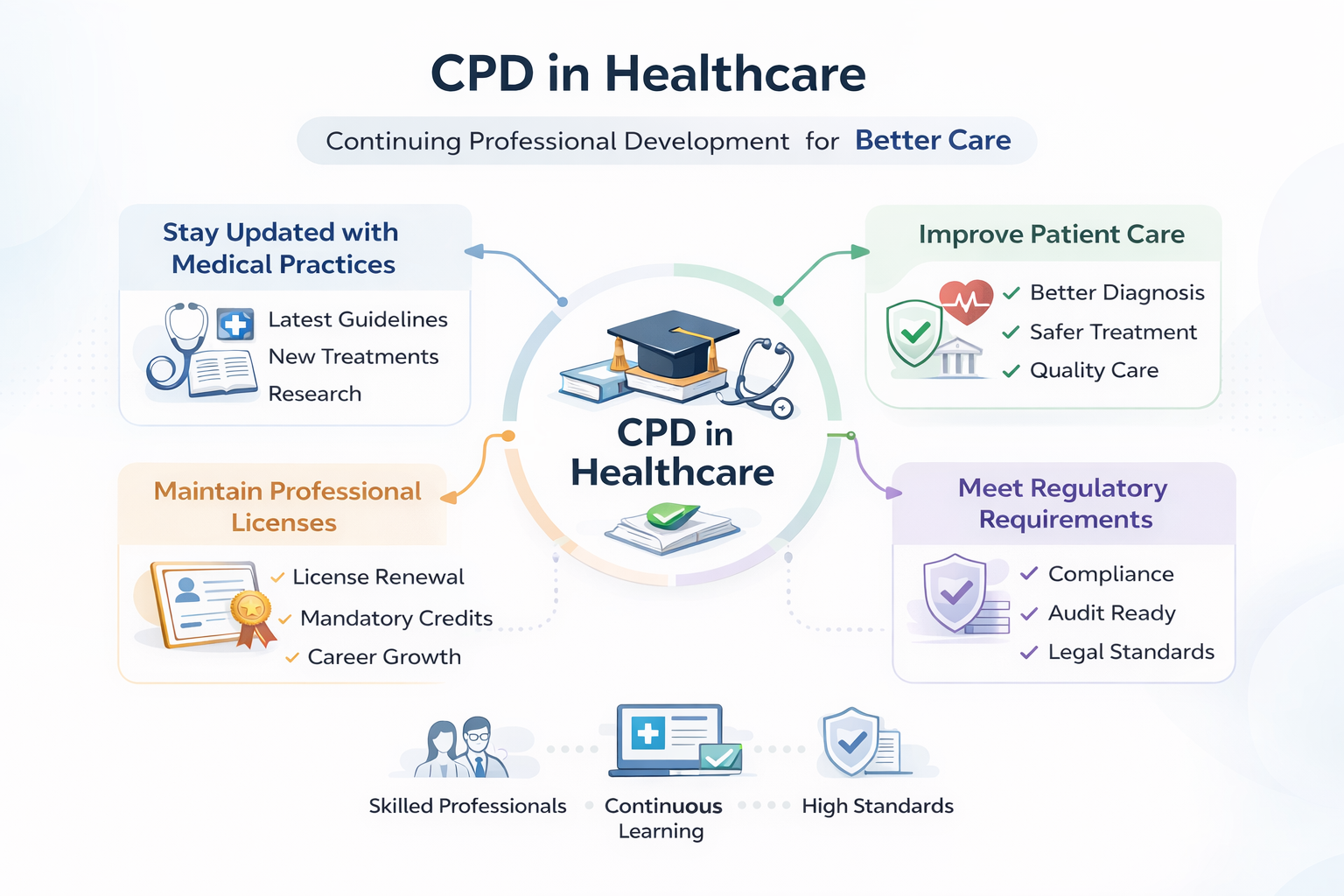
Continuing Professional Development( CPD) or Continuing Education Unit (CEU) means ongoing education to assist professionals to improve their knowledge and skills after initial training.
Healthcare professionals participate in CPD to:
- Stay updated with medical practices
- Improve patient care
- Maintain professional licenses
- Meet regulatory requirements
Most healthcare regulators require a fixed number of CPD credits each year. In most systems, one hour of learning is equivalent to one continuing professional development credit.
They also keep records of what they have learned. Records may include:
- Course name
- Provider details
- Completion date
- CPD credits earned
Organizations should have proper tracking systems for maintaining records, since these records are important for license renewals.
What Activities Count as CPD in Healthcare?
Different types of learning activities help healthcare professionals earn CPD credits.
Some of the CPD activities include:
- Online courses
- Workshops and seminars
- Conferences
- Research updates
- Teaching/mentoring others
Both formal and informal learning will count if they improve professional knowledge or clinical practice.
Since professionals might have different learning activities during the year, it becomes necessary to have a clear record.
CEU Requirements for Healthcare Professionals
The requirements of the CPD are different based on the profession and authority. Every healthcare discipline has its own guidelines on the number of CPD hours required by professionals.
For example:
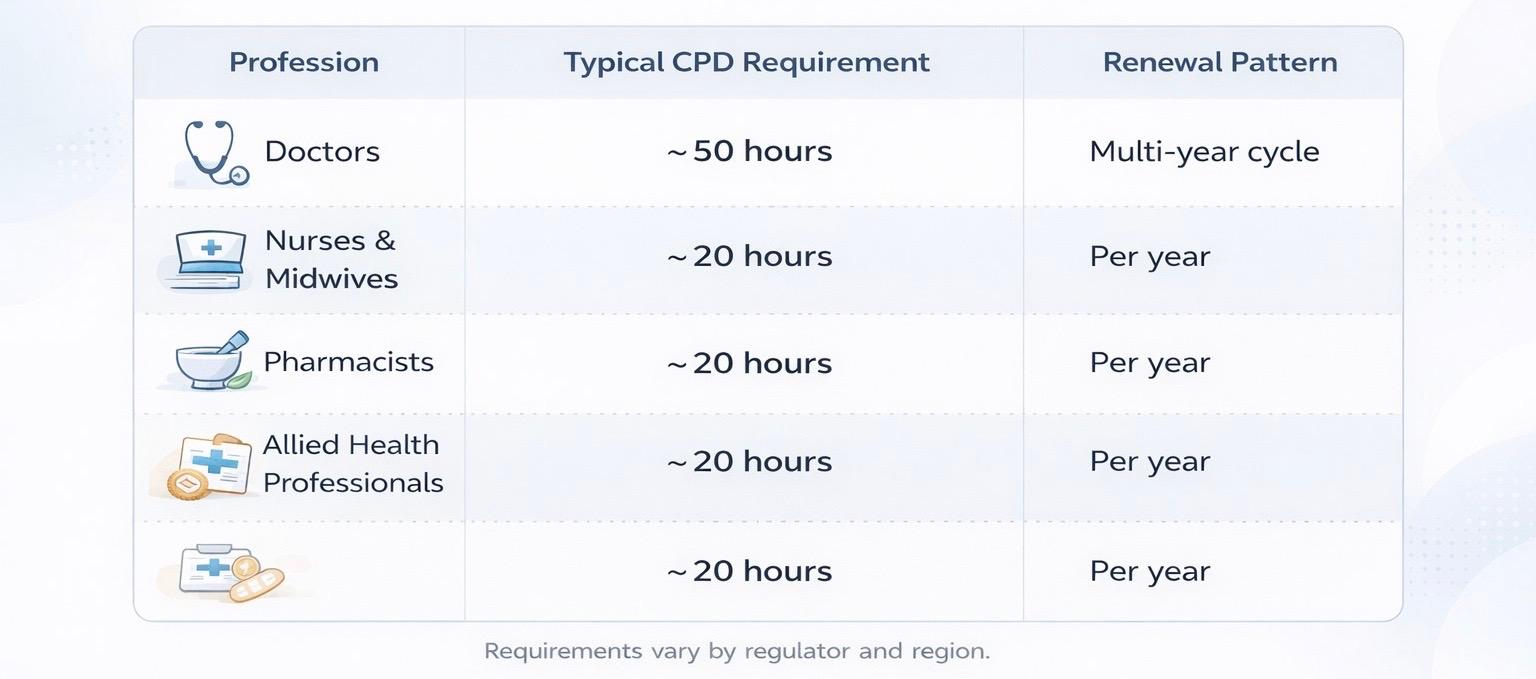
This helps healthcare workers improve their skills and stay updated with the latest medical practices.
Why CPD Tracking Is Difficult for Healthcare Training Providers
Many healthcare training providers still use spreadsheets, emails, and manual records to track CEU activities. This can be effective when dealing with small programs, but it becomes challenging when handling large numbers of learners.
Below are the most common challenges.
Administrative Overload
Training administrators must manually track:
- course completions
- CPD credits
- certificates
- yearly credit totals
When hundreds of healthcare professionals are involved, this creates a heavy workload.
Compliance Risks
Healthcare regulators may request proof of CPD activities. If records are scattered across files or emails, preparing compliance reports becomes stressful.
Lost or Incomplete Records
Certificates and course records may get lost over time. Without proper tracking, professionals may struggle to prove they have completed the required learning activities.
Difficulty Scaling Training Programs
As training programs grow, manual systems struggle to keep up. Managing multiple courses, learners, and credit calculations becomes inefficient.
In some cases, failing to meet CEU requirements may delay professional license renewals or cause compliance issues with regulatory bodies.
Because of these challenges, many organizations now use CPD tracking software to automate the process.
What is LearnDash CPD Tracking?
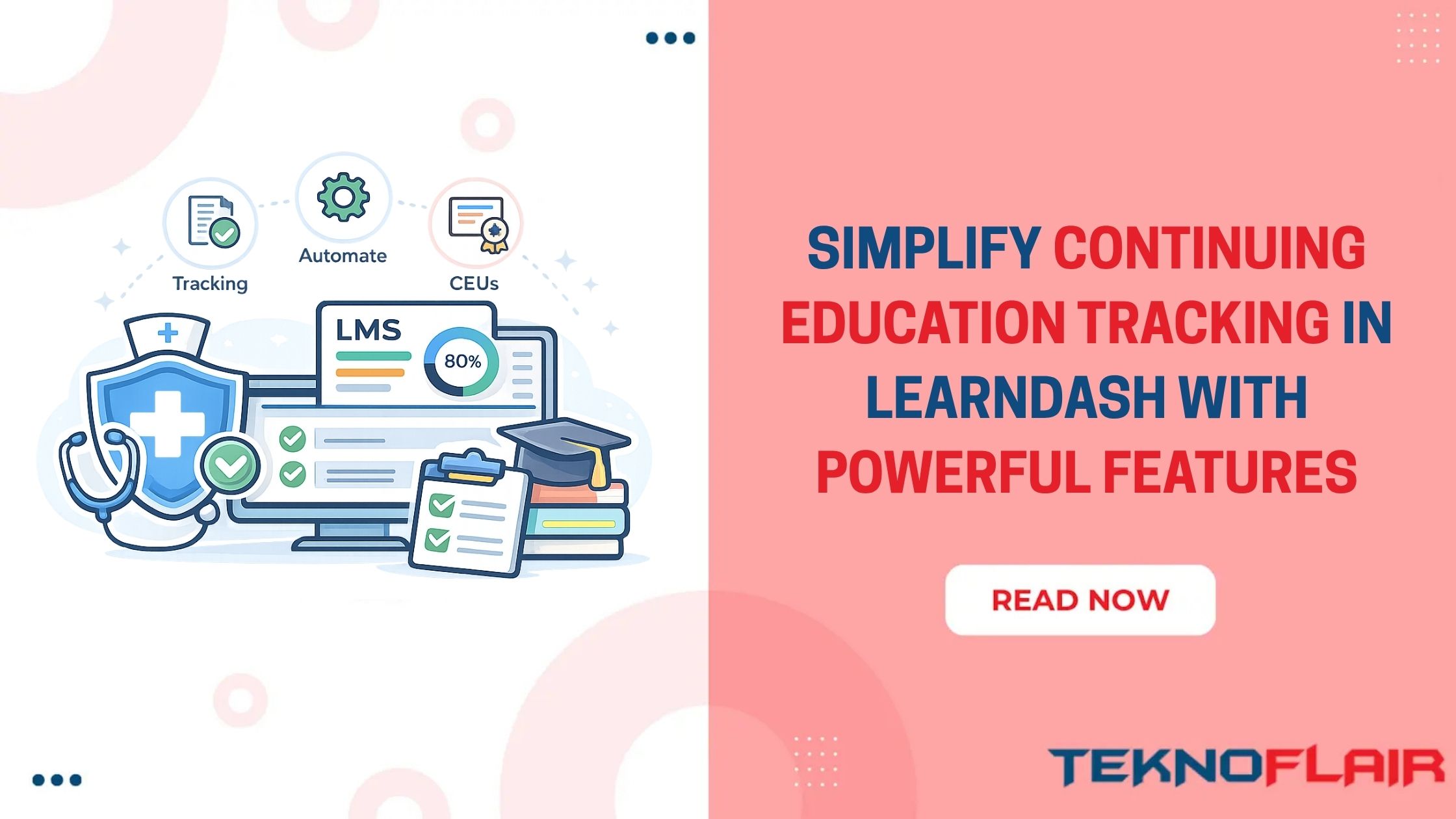
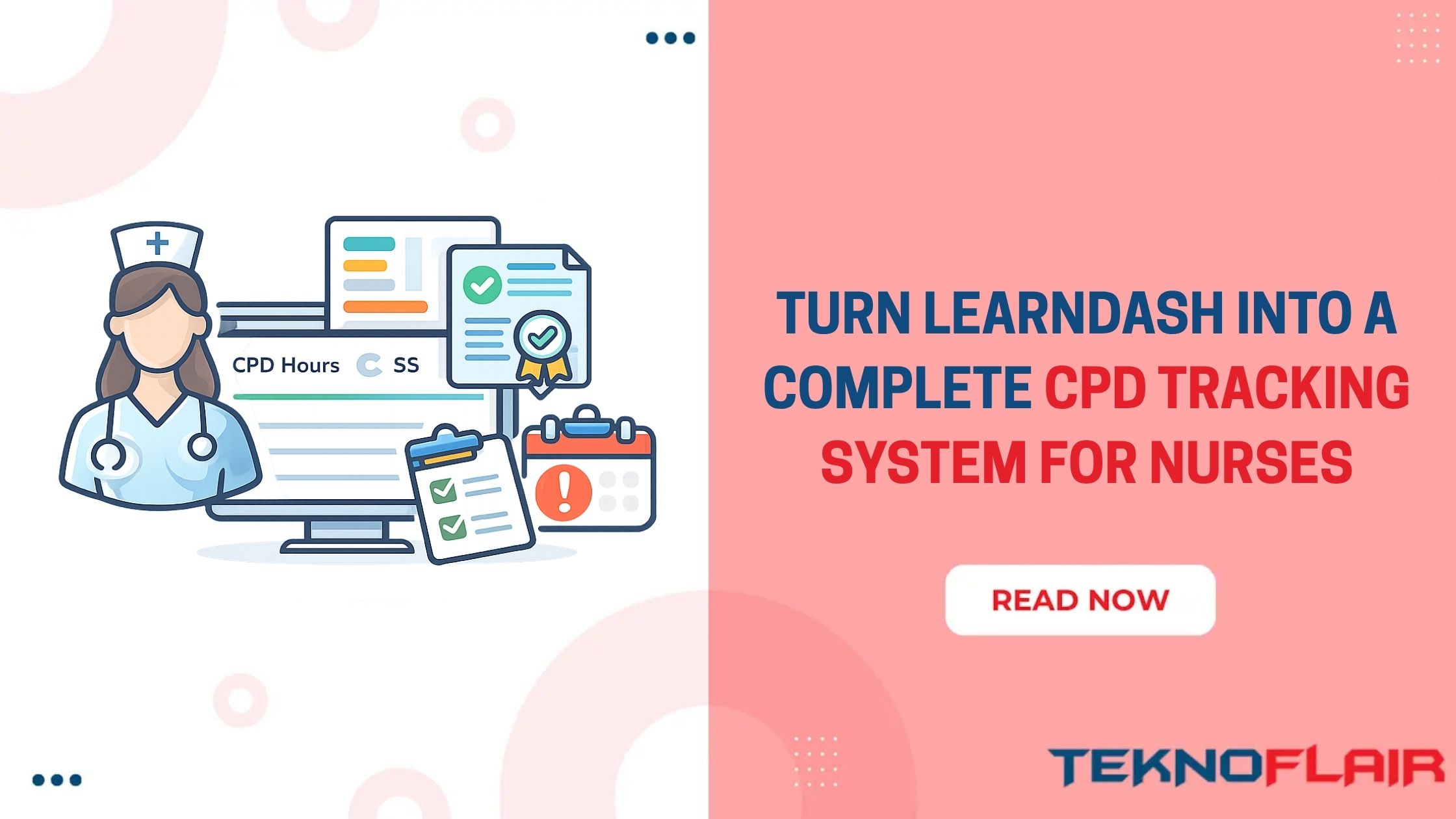
LearnDash CPD tracking helps healthcare training providers assign, record, and monitor CPD credits on their learning platform. It allows organizations to track CPD hours, keep learning records, and create compliance reports for healthcare professionals.
For healthcare organizations, it provides a structured way to deliver education and track CPD hours online.
Many hospitals, healthcare academies, and medical training providers use an LMS for healthcare training because it allows them to:
- Deliver online courses to healthcare professionals
- Manage learners and training groups
- Monitor course progress and completion
- Issue digital certificates after training
- Maintain organized learning records
However, LearnDash mainly focuses on delivering courses. It may not automatically track CPD credits or maintain detailed professional development records.
Because of this, many healthcare training providers extend their LMS with a CPD tracking system that records credits, maintains Continuing Education history, and generates compliance reports when needed.
How LearnDash Continuing Education Tracking Works
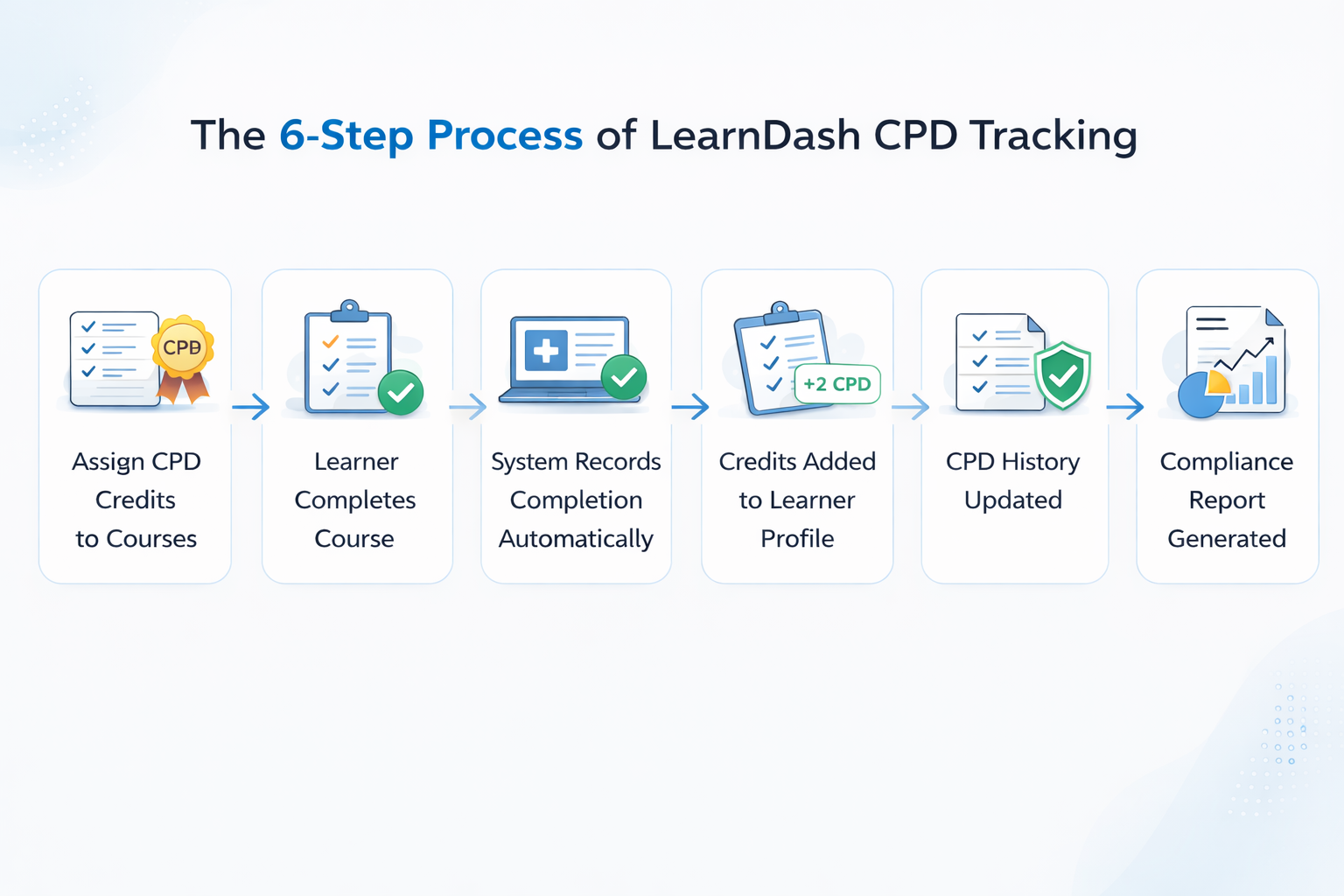
With the right tools, LearnDash can become a complete CPD tracking software for healthcare training. A CPD system built on LearnDash typically works like this.
Assign CPD Credits to Courses
Each course can have a defined number of CPD credits.
For example:
- Infection Control Training – 2 CPD credits
- Patient Safety Course – 3 CPD credits
- Emergency Care Training – 4 CPD credits
This allows training providers to clearly define the value of each learning activity.
Automatically Record Course Completions
When learners complete a course, the system records it automatically. This removes manual tracking and keeps training records accurate.
Track CPD Credits Earned
The system is able to calculate the total credits earned by each learner. It is easy for professionals to know the total credits earned as well as those yet to be earned. It is thus easier to track CPD hours online without additional records.
Maintain a Complete CPD History
A digital system stores a full history of learning activities.
Administrators can review:
- courses completed
- credits earned
- certificates issued
- learning progress
This history becomes useful during compliance reviews or license renewals.
Generate Compliance Reports
Training providers often need reports that show CPD activity across their organization.
A structured system allows administrators to quickly generate reports showing:
- total credits earned
- course completion data
- training participation
These reports make regulatory reporting much easier.
Example: CPD Tracking for Healthcare Training Program
Let’s assume a hospital’s training department offers courses like infection control or patient safety. So, each course carries a specific CPD credit value.
When doctors and nurses complete these courses through LearnDash, the CPD system automatically records the earned credits and updates their learning records. Administrators can then generate compliance reports whenever required.
How TeknoFlair’s LearnDash CPD Plugin Simplifies CPD Tracking
To fully manage CPD programs, healthcare organizations often extend their LMS with a dedicated CPD tracking solution.
The TeknoFlair LearnDash Continuing Professional Development Add-on adds CPD management capabilities directly inside LearnDash. It allows training providers to track professional development credits without using separate tools or spreadsheets.
With this plugin, organizations can:
- Assign CPD credit values to individual training courses
- Automatically record CPD credits when a learner completes a course
- Track CPD hours online for every healthcare professional
- Maintain a complete history of learning activities and certificates
- Generate reports for compliance reviews and audits
Training providers can use the LMS to manage courses, learners, and CPD records in the same platform using the CPD Add-on.
This would remove the manual tracking requirement and minimize the chances of error.
Benefits of Using a CPD Management System
Using a structured system for CPD tracking provides several advantages.
Reduced Administrative Work
Automation removes the need for manual credit calculations and record management.
Accurate Training Records
Digital tracking ensures all training activities are recorded properly.
Easier Compliance Reporting
Organizations can generate reports quickly when regulators request training records.
Better Learning Experience
Healthcare professionals can easily monitor their progress and stay motivated to complete training.
Centralized Training Platform
All courses, certificates, and CPD records remain organized in one place.
Who Should Use a LearnDash Continue Professional Development System
A LearnDash-based CPD system is useful for many types of organizations.
Examples include:
- hospitals providing staff training
- healthcare academies offering professional courses
- medical associations running continuing education programs
- compliance training providers
- online healthcare education platforms
These organizations often manage large numbers of learners and must maintain accurate training records.
Build a CPD-Ready Healthcare LMS
Healthcare training programs are not only required to provide education; they are also required to keep track of professional development.
With the help of LearnDash and a CPD tracking tool like TeknoFlair’s LearnDash CPD plugin, it is possible to make CPD management more efficient.
It automates credit tracking and maintains compliance with healthcare regulations. So, training providers can deliver quality education while the system manages the administrative work behind the scenes.
